
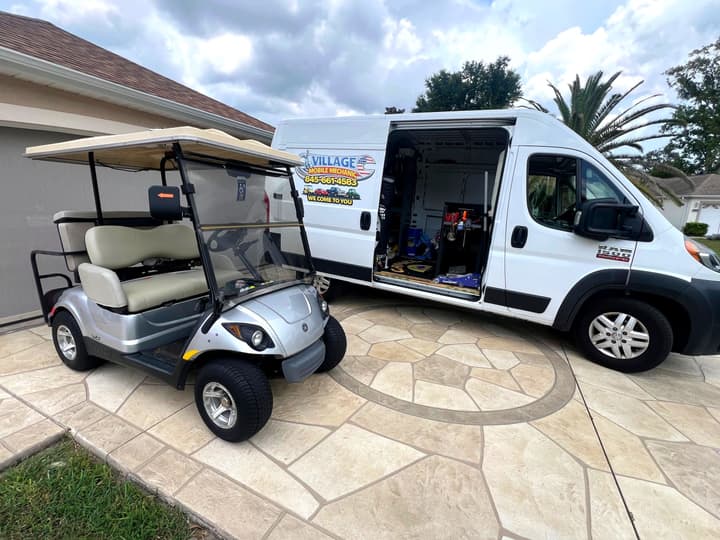
If you live in The Villages, your golf cart isn't a toy. It's how you get to the square, the pool, dinner, and your neighbor's driveway for cards on Thursday. So when you walk out to the garage and the cart won't even click, it throws off your whole day.
Here's the good news: this is one of the most common calls we get, and it's almost always fixable without a tow, a trailer, or a trip anywhere.
Why golf carts die faster here than almost anywhere else
Florida is hard on batteries in a way that most other states aren't. Between the heat and the humidity, three things happen faster here than up north:
Terminal corrosion builds up quicker. Humidity in the air reacts with battery terminals and creates that white or greenish buildup that blocks the electrical connection. A cart that looks "dead" is often just corroded at the connection point.
Batteries self-discharge faster in the heat. A cart parked in direct sun in a Florida summer loses charge sitting still faster than the same cart would in a cooler climate. If you haven't driven it in a week or two, that matters.
Water levels drop faster in flooded lead-acid batteries. If you're still running the older style batteries (not lithium), the water inside evaporates faster in our climate, and low water shortens the life of the cells permanently if it's not caught.
What to check before you call anyone
If your cart won't start, take two minutes and look at the battery terminals. If you see white, blue-green, or crusty buildup on the posts, that is very likely your problem. Do not scrape it off with a metal tool or pour anything on it. That is a job for someone who does it carefully.
If the terminals look clean and it still won't start, it's probably one of a short list of things: a weak or dead cell, a bad connection at the solenoid, a tripped circuit breaker (common on carts that got wet or overloaded), or on older carts, a charger issue rather than the battery itself.
How often you should actually be checking your cart
For most Villages residents, the maintenance that actually prevents this is simple:
- Check terminals for corrosion once a month, more often in peak summer.
- Charge after every use, even a short trip to the mailbox, since partial charging shortens battery life over time.
- Park in the garage or shade rather than leaving it in direct Florida sun when you're not using it.
- If you have flooded lead-acid batteries, check water levels every 2-4 weeks in summer and use distilled water only.
A well-maintained cart battery in this climate should last 5-6 years. A neglected one can fail in under 2.
Why call a mobile mechanic instead of the dealer
Most golf cart dealers in The Villages are booked out, especially during snowbird season when everyone's carts come out of storage at once. You shouldn't have to wait a week and a half for something you might be able to fix from your own driveway with a two-minute diagnosis.
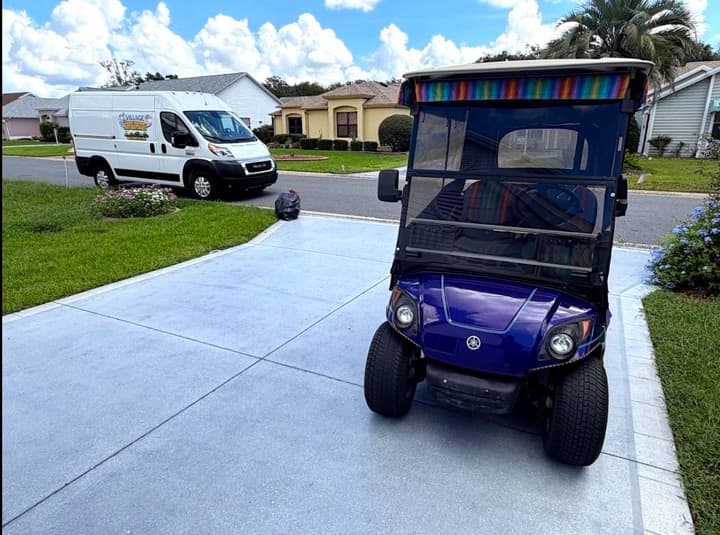
That's the whole idea behind Village Mobile Mechanic. I come to you, wherever you are in The Villages, and diagnose it right there. If it's a battery or terminal issue, most of the time I can have you back on the cart path the same visit. No trailer, no waiting room, no dropping it off and hoping someone calls you back.
Need a hand with this?
If your cart won't start, don't wait on a dealer appointment. Call or text Village Mobile Mechanic and I'll come look at it in your driveway, usually same day. Cars, trucks, and golf carts, all serviced right where they sit.