
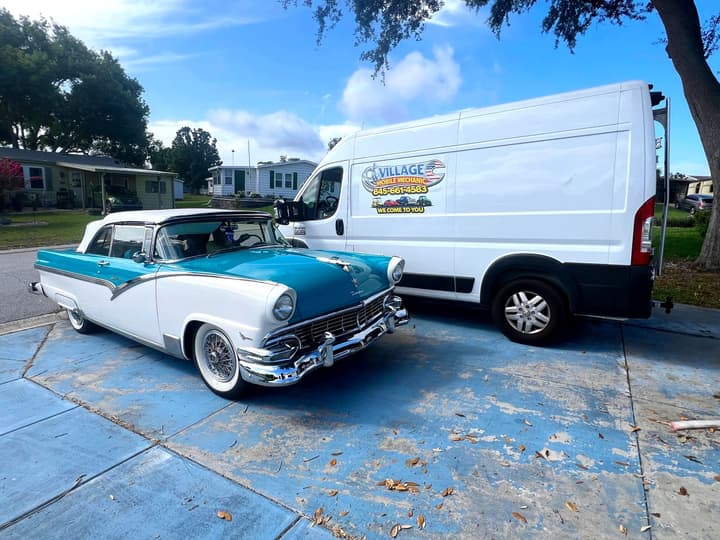
If you split your year between The Villages and somewhere up north, you know the drill: pack the car, close up the house, and try to remember everything before you pull out of the driveway. Your vehicles usually end up last on that list. That's exactly when problems get baked in for months.
Here's the checklist I'd actually give a neighbor in Lady Lake or Oxford, not a generic list off the internet.
For your car or truck
- Change the oil before you leave, not after you get back. Old oil sitting in an engine for months does more damage than old oil that's actually being driven on.
- Fill the gas tank most of the way and consider a fuel stabilizer if you'll be gone more than 2-3 months. A near-empty tank invites condensation, and stale gas causes hard starting when you return.
- Get the tire pressure right before you go. A car sitting for months on underinflated tires can develop flat spots in Florida heat.
- Disconnect the battery or put it on a trickle charger/battery tender. A car that sits for months without being driven often comes back to a dead battery, and repeated dead-and-jump cycles shorten a battery's life.
- Wash it and consider a breathable cover if it sits outside. Florida pollen, sap, and humidity are rough on paint and rubber seals over a long sit.
- Ask a neighbor to start it and idle it 10-15 minutes every few weeks if possible. It's the single best thing you can do for a car parked for months.
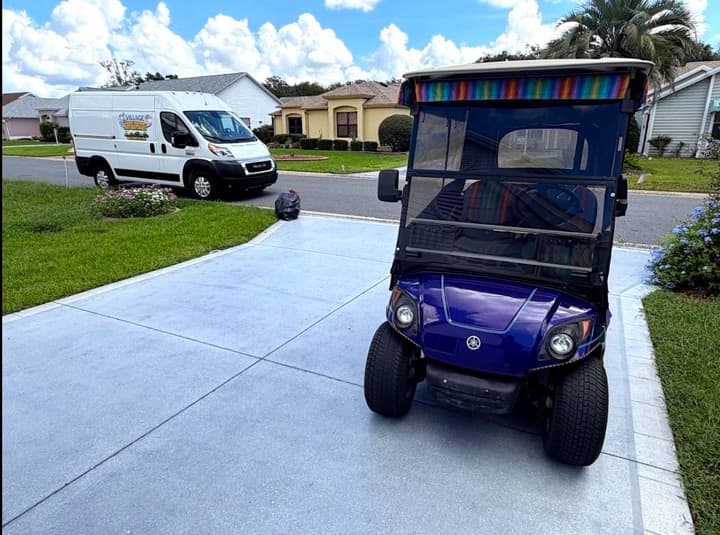
For your golf cart
This matters more than people think, since carts often sit even longer than cars, sometimes all summer.
- Charge it fully right before you leave, and check it again if you're gone more than 8-10 weeks. A fully depleted battery over a Florida summer can suffer permanent capacity loss.
- If you have flooded lead-acid batteries, check water levels one more time before you go. Low water plus months of heat is close to a worst-case scenario for those cells.
- Park it in the garage, not outside under a carport, if you have the option. Direct summer sun accelerates self-discharge and heat stress on the battery even when it's not being driven.
- Apply corrosion protection to the terminals before you leave. Come back to clean connections, not a project.
The mistake I see the most
The most common thing I get called out for in the fall, when snowbirds start coming back to The Villages, Lady Lake, and Oxford, is a "dead" golf cart that isn't actually dead. It's corroded terminals or a battery left fully discharged all summer that lost capacity it's not getting back. Both are largely preventable with about 15 minutes of prep before locking up the garage.
Frequently asked questions
Should I disconnect my golf cart battery completely before leaving for the summer?
For most lead-acid setups, a full charge plus a maintainer/tender is better than fully disconnecting and walking away. For lithium batteries, check your manufacturer's storage guidance, since some have different recommendations.
How long can a car sit in Florida without being driven?
A few weeks is usually fine with basic prep. Beyond 2-3 months, a battery tender and fuel stabilizer make a real difference in how the vehicle starts back up.
Do you offer a pre-departure inspection?
Yes. One visit covers your car and your golf cart before you head north, so you're not troubleshooting it from another state if something goes wrong while you're away.
Need a hand with this?
Heading north soon? Book a pre-departure check with Village Mobile Mechanic before you go, so your car and cart are both ready the second you're back. I come to your driveway anywhere in The Villages, Lady Lake, Oxford, or Wildwood.